
Preparedness for school interests me on many fronts. I have taught this age group in schools (although presently a very happy middle school teacher!) and am a parent myself. After teaching some Foundation, I decided to put a year’s hold on my son starting school, as I saw the benefits of being emotionally ready for school. My decision paid off as he was totally ready to take on school – and in the extra year he spent with parents, grandies and childcare, he became driven to learn and master so many things. This meant he entered the big world of school with confidence. Don’t ever hesitate to consider this, as legally a child does not need to start school until the year they are turning 6. Now, instead of going to high school when he is 11, he will be 12, and instead of attempting year 12 at age almost 17, he will be almost 18. It’s important to start thinking about this when they’re around three, before the kindergarten year, as the preschool years are such a special time that you wouldn’t want to miss it! If your child is not ready for school physically and emotionally, it will be a hard slog in the Junior Primary years for them, you and their teachers. I hope this article helps you get your child ready and make decisions that are right for your child. Starting school is a HUGE step because your child must be ready to be independent of an adult. Yes, the teacher is there, but if they have a class full of kids who are unable to function independently with basic activities, not only will less learning take place in the first year of school, there’ll be a slew of meltdowns.With mid-year intake coming back into vogue, it’s time to re-read this old post to see if your child is ready or should wait another 6 months!

Self-care
Sounds harsh, but your little one now needs to be able to look after themselves for the most part, including the following.
Manage their bodily functions and associated hygiene
It occurred to me when one of my children went off to school that they still needed my help when blowing their nose. I quickly taught them how to fold the tissue over their nose, take a breath to help a big blow,, and ‘hide the boogies’ by folding up the offending sludge, before putting it in the bin and washing his hands. Same with toileting. Even though your child may be long toilet-trained, you will need to reinforce the why of washing hands thoroughly afterwards and tell them to let an adult know if the soap has run out! Honestly, schools are SO germy due to the sheer number of people there – so parents please teach your child to cough/sneeze right into the crook of their arm and discourage finger sucking, nose picking and all the other gross, germ-spreading habits! Handy tip: I donate a large hand sanitiser to my children’s classroom each year just in case supplies run out! They also carry a small bottle in their bag.Communication
It’s really important that children who go to school are able to communicate their needs. Kids who can’t do this are more likely to get frustrated and flip their lid -cue struggles with social skills and making friends – again, not much learning takes place when kids are in social & emotional turmoil so please start to help then manage & communicate their feelings in the toddler years. Children’s speech develops at different rates, but if any of your children’s early educators express concern, take them off for an assessment. Early intervention is crucial and waiting lists are long, a little check up doesn’t hurt and the kinder year is the perfect time to do some speech therapy.
If you ‘wait to see what school thinks’ about how your child is going’, you will be entering a system where there are many hoops to jump through and a long, drawn out process to get funding and support. Issues are resolved a lot quicker when you get early intervention before the school years start.
Children’s speech develops at different rates, but if any of your children’s early educators express concern, take them off for an assessment. Early intervention is crucial and waiting lists are long, a little check up doesn’t hurt and the kinder year is the perfect time to do some speech therapy.
If you ‘wait to see what school thinks’ about how your child is going’, you will be entering a system where there are many hoops to jump through and a long, drawn out process to get funding and support. Issues are resolved a lot quicker when you get early intervention before the school years start.
Safety
Trusted Adults at School
I always say to my children that adults at school who are in charge wear a badge. There have been occurrences of adults entering school grounds and you can just imagine what could happen if they instruct a child to ‘come with them’ and the 5-year-old in a new environment could assume they are a teacher or school worker! If the person is not wearing a school badge, tell them to find someone who is or head straight to the Front Office.
Home time
Always go into the school to pick up your Junior Primary student. Collect them from their classroom. After a year or so of school, they will be able to meet you at a designated point (i.e. ‘the monkey bars’). Most schools have gates too high for young children to get out of without an adult so don’t expect them to walk in/out by themselves. Also, as a parent, you want to make sure they actually make it to the classroom in the morning. Make sure they know who is allowed to pick them up from school. If alternate arrangements need to be made, contact the front office – not the teacher – they have a lot going on and often don’t see emails regularly. Make sure your child knows that they are not allowed to leave the school without the teacher’s permission and can only go with one of their trusted adults (parent, grandparent, etc). Tell them that the teacher regularly takes a roll of student names to check that everyone is there, so they must make sure the teacher knows they are going home early.School Life
School is a big beast for students and families. There is a lot to become orientated to for you and the little one!Organise a play date before school starts
It can be a long break between the end of kindergarten and the beginning of school. Organise a get together at the park with the kindy kids who are going on to the same school to keep up the familiarity your child has with these students. It will be a blessing when they can find these kids in the playground on their first day.
Navigating the school grounds
Make sure your child knows where the main parts of the school are:- Front office
- Toilets
- The OSHC centre, even if you don’t plan on using it – an emergency may come up.
After School play
If you have the time and your child isn’t too tired, hang about for a play on the playground after school. Bring a snack, they will be STARVING, and enjoy some fresh air and sunshine. You will meet other parents without trying and give your child that bit of extra time to adjust to their new surroundings. Plus, kids don’t get enough playtime these days to work on their Fundamental Motor Skills – this is one way to banish this guilt!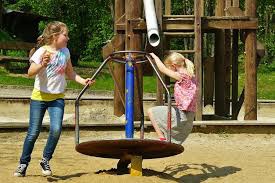
Learning Basics
There are so many skills we take for granted. Once upon a time, children had 4-5 years at home with the full attention of a primary caregiver. More recently there have been competing time and attention pressures and you may find yourself going ‘oh wow, I don’t think they have ever cut with scissors, better get onto that!’ (Childcare and kinder, thank you, for the job you have done to fill our gaps!) Parents, make sure your child can:- Cut with a pair of scissors
- Recognise their name in handwriting and typeface
- Write their name – this is a standard goal for completing preschool, please support it at home.
- Know their full name and names of their parents and any other trusted adults that will have permission to collect them from school.
- Turn the pages of a book
- Dress themselves in their uniform (think buttons, zips and ties) and footwear – please no laces until they have mastered tying them themselves!!
- Sharpen a pencil, hold a pencil, draw and colour-in
- Focus on an activity for 15 minutes at a time, and help pack up
- Know letter names and sounds – Jolly Phonics and Reading Eggs are fantastic programs.
- Take turns and share – and praise them when they do this without an adult’s support
- Manage their emotions – children are allowed to have and show emotions because they are humans, but if your child still can’t share or throws a tantrum if they don’t get their way by the time they start school, there is work to be done by you, the parents
- Express their feelings and needs to an adult. In today’s mobile-in-hand age, we are unfortunately not talking enough with our children and it is affecting expressive and receptive language skills. Right from birth, sing, talk and tell stories to your children and don’t be afraid to use big words and be very expressive when you speak (i.e. not monotone). Put on The Wiggles or ABC Kids and sing and dance with them. They will relish the one-on-one attention before they become 1 of 20 in a classroom.
- Count on fingers. Any number basics you can model at home will be most helpful for feeling confident at school. If they can count up their Smarties, count on their fingers how many kindy friends or matchbox cars they have, you are starting them off with an essential skill they can head off to school with (confidence is everything!)
- Flex their working memory – Working memory is what they can hold in their brain and recall a few moments later. Get them to help you with a recipe and ask them to remember ‘a cup of milk’. When you get to that point in the recipe, ask, ‘how much milk‘? Increase the complexity from here. Ask them to remember 3 things on your shopping list at the start of the trip. Check with them after about 5 minutes. Make up 6 silly dance moves together and pretend you’ve forgotten the first two. The possibilities are endless.
- Take instructions from an adult other than you, in a timely manner. You can practice this at home – if you ask your child to put their shoes away and they don’t, say ‘this is a reasonable request, we all need to help tidy up‘. Use this language consistently and if their cooperation doesn’t improve, point out that their school teacher will need them to do this stuff all the time and they need to start learning it. It won’t happen overnight, it’s an ongoing battle, for the sake of everyone’s sanity, start now!
- Help tidy up and transition from one activity to another – explain that they don’t get to spend as much time as they’d like on some things and may need to come back to their favourite activity later. Their teacher will thank you.
- Unpack and pack their bag. Practise packing in the lunch, drink bottle, hat and reader folder. Practise taking it out again and setting it up in a pretend classroom. As you or another trusted carer in their lives will be taking them to and from their classroom in their first year, you will be able to help them a bit but your arms may be full with another child or 1000 art projects, so put your child to use. They will feel so capable and helpful!
- Wear a hat outdoors. Most kids who have been to childcare and preschool are used to this, but if they haven’t been required to play outdoors with a hat on, they will struggle with this. No hat = shade play! Again, do it from the toddler years and there won’t be a problem
- Can manage the content of their lunchbox: make sure they can unpackage their food including twisting tops, clipping, zipping and sealing – home practise is a must. Hot tip: Tell them that they get 10-15 minutes to eat lunch and they can’t take their containers into the playground (you.will.lose.SO.many!) so when it’s time to eat, EAT A sharp early years teacher will start lunch eating a bit earlier to ensure your cherub has enough time to eat.
Parents, are YOU ready for school?
After reading this, you may feel confident that your child is ready for school, but are YOU ready for school? And I’m not talking about the parents who are crying in the carpark versus those yelling ‘yahoo’ as they run off for child-free coffee – there are some major logistics to get organised and stay organised. Once you have completed enrolment forms (by the end of your child’s kinder/preschool year) you need to organise a uniform. Label. Everything. (I even embroidered the brim of my child’s hat after losing the sixth one in two years – I was not one bit sorry about the potential embarrassment I may have caused, but guess what – all the other kids wanted their name on theirs!
Make friends with the ‘school mums’ (and dads)
As much as you probably love your existing friends, it’s so rewarding to have a new batch of friends in your life that know exactly what stage your family is at, the pressures and the challenges and the small victories. You will become each other’s support network for play dates, emergency check ups and ‘what are those excursion details again?’ discussions. Get onto the school apps – there are a plethora of them: Seesaw, Qkr, Skoolbag, Secta, Daymap and then there’s Studyladder, Epic Reading…get my drift? Install the ones recommended by the school and teacher. To avoid information overload or missing out on information like ‘canteen is shut today’, set up a daily or weekly notification at a time you can sit down with a cuppa and catch up. Connect with your schools socials to stay in touch but avoid identifying on your personal page which school your child goes to. Do not whinge or bag the school on these pages and make life difficult for your child.So that’s you all set for school!
Have I missed anything? Want to know more? Email me or comment on my post.Discover more from bethehumanelement
Subscribe to get the latest posts sent to your email.
