
A successful ban on mobile phones in Australian schools is a start. There’s much more to be done, but are the government taking the action they need to catch up on their failures?
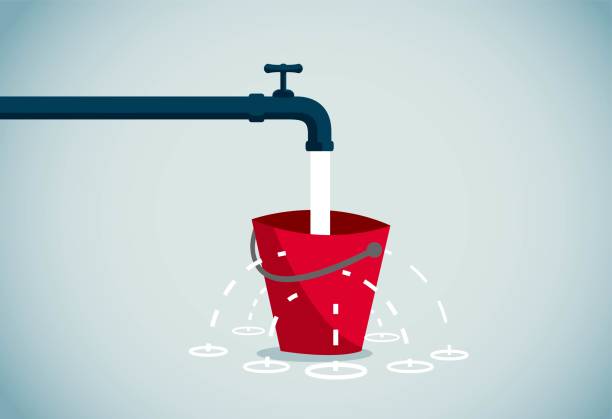
It’s long been known by educators, researchers and thought-leaders: children are suffering from mental, physical and social diseases caused by ubiquitous and relentless technology access. A mobile phone ban in Government in schools in Australia has been world-leading such that the US is now adopting it. However, it’s merely scratching the surface. It’s the tip of the iceberg. For those involved in parenting and the education and care of children, it feels like we are filling a bucket full of holes.
Yes, the mobile phone ban in schools has been overall very effective (hooray!), but until we address systemic, social and technology issues, we are filling a bucket full of holes. Governments and their institutions have failed children and there is a massive amount of catching up to do, to quell the impacts. In the meantime, should we continue filling a bucket full of holes?
YES. Anything is better than nothing. Should we fix the holes? Yes, but how?
Prior to the mobile phone ban in schools, the main issues we saw were students on their phone in the yard, using 100% of their break time nose-in-phone. No talking, no playing, no socialising, no movement – some even forgot the basic functions of eating, drinking and going to the toilet before class re-commenced.

Once inside the classroom, we saw many things of equal or greater concern:
– Students who remained nose-in-phone, refusing to engage with the teacher or the lesson
– Students who were constantly distracted by social media, message and gaming notifications
– Students who were gaming/messaging/posting to social media instead of doing their work
– Students and teachers being recorded without permission
– Students taking phones into toilets to take said-forgotten toilet break, but also communicate and game more freely, disappearing for lengths of time into the only place a teacher (the person who has duty of care for your child’s welfare during school hours) does not have immediate right of access to
– Students accessing adult material through simple web searches, or without their consent due to social media algorithms pushing it into their hands and eyes
– Students who could not hold their attention to a task due to the insta-gratifying nature of mobile technology
– Students who did not know how to start, hold or end a conversation with other students/people due to lack of practice/having a mobile phone as a social crutch
– Students lacking empathy, due to low frequency of interactions with diverse peers and their algorithms sending them down narrower and narrower thought-rabbit holes.
If you are reading this and saying ‘but they need to learn how to use technology, it’s not going away, humour me by reading this footnote1.
One of the most powerful aspects of the ban is the experience of time spent without disruptive content for a portion of the day. Students see teachers operating without them, students begin to see that when they are without them, they make eye contact and talk to others, cooperate with them to learn, and focus on a task for minutes at a time. The anxiety associated with FOMO is something that is eventually overcome (because guess what, most of their friends are in school and therefore ‘offline’), and for the first time in their lives, the students are able to exist in a different bubble without pings, snaps and new posts.
As a result of the mobile phone ban, we have dramatically improved the safety of children from the harms caused by the content being accessed on them. However, our children are still unsafe outside of school hours. The ban exists in an environment where it is currently impossible to protect children from the grave harms of unregulated technology. A mobile phone ban in schools is just the beginning, the tip of the iceberg – the very laptops they are using can have default gaming notifications (Xbox, anyone?), constant weather updates (yay for a new type of (climate) anxiety), social media and gaming apps can be searched and used via the web, VPNs (private internet browsers2) exist and remain unregulated, and the Australian Communications and Media Authority doesn’t seem to be doing anything about Smart TVs, meaning children can access anything on default apps like You Tube, including p*rn.
Yes, we are filling a bucket full of holes. The holes in the bucket are the unlimited access to unregulated content by a child on many different devices, at all times of day, and the government needs to step in. When you put it like this, it sounds as bad as ‘supplying an underage person with alcohol,’ or ‘failure to use a seatbelt in a moving vehicle’! Once again, ‘freedom fighters’ will argue that the government is trying to control us and that we should be able to make decisions. However, laws exist to protect people from death, injury, abuse and trauma, and I would argue that child access to unregulated media can cause ALL of these.
Parents can plug the holes to reduce the leak, and should continue to keep trying with enabling all possible device settings and parental boundaries possible, but until media and gaming authorities step up to the place and put in place child protection mechanisms, they will continue to be perpetrators of harm against children. It’s time to fix the rest of the leaks!
- Those who argue that young people need to ‘learn to use their devices appropriately in today’s world’ are often those that do not understand child mental, social and emotional development. A specific example is that children are not able to self-regulate their behaviour in the same way most functioning adults can. The ‘mobile phone ban naysayer’ needs to consider that school lessons run for anywhere from 45-80 minutes, and with 25 students there is 1.8-3.2 minutes per student of communication time available. Think back to junior primary school. We have lining up, sitting on the mat and waiting quietly, enabling a lesson to start effectively and efficiently. If a student isn’t complying with classroom routines or behaviour expectations, it takes 10-30 seconds to issue an instruction replated to this, depending on how often it must be repeated and whether the student complies. Let’s assume an average of 20 seconds, that’s a minimum of 7.5 minutes of a 45 minute lesson of a lesson being wasted if every student needs a mobile phone reminder (and pre-ban, 75% of students did, throughout all lessons). Due to the addictive nature of these devices, merely having a ‘no phone during lessons’ expectation is impossible, and does not resolve all of the issues outlined above.
Regardless of rules and expectations, students will retrieve that phone during independent learning or quiet learning time, or indeed any other possible moment, therefore the time avoided setting expectations at the beginning of a lesson is eventually required in the middle part of the lesson. This led to many schools adopting the Yondr pouch to have phones locked up at the beginning of the day, but remain in the student’s possession (can you imagine having to build hundreds of phone lockers at a school?). The no-phone naysayers are quick to point out that students can pretend to lock their phone away, put a fake ‘burner’ phone in there instead, or even a calculator/object of similar size and shape. This is true, but government policy can produce astounding behaviour change – look at the effect populations complying with Covid-19 measures had! Whether we agree with how Covid restrictions played out or not, we have to admit it was extremely effective in Australia due to a trust in authorities. Having a blanket policy of no phones in schools as is a condition of remaining involved in the school community is effective for the large majority of the population. It produces a herd effect of behaviour change, the same way Covid restrictions did. ↩︎ - Virtual Private networks are private internet browsers that circumvent regulatory authorities like the school IT system – if your kid is a gamer they are definitely using one. VPNs protect your data, mask your IP address (hello predators and illegal activity), bypass geo-restrictions, and parent-led device restrictions ↩︎
~All writing is my own, I do not use any AI to generate content and do not give permission for any machines to learn my thoughts contained here in my blog posts. AI may not use my content to generate unoriginal thought ~
Discover more from bethehumanelement
Subscribe to get the latest posts sent to your email.
